Categories
Uncategorized

Efficient Additive Manufacturing Pricing

THE COSTS OF 3D PRINTING – AN OVERVIEW OF KEY CONSIDERATIONS

The advent of Industry 4.0 has led more manufacturers to consider additive manufacturing as a complement to their processes. In order to participate in this new paradigm, you’ll need to understand the primary drivers of additive manufacturing costs. We will examine the four primary factors that affect production costs in additive manufacturing.

PRIMARY ADDITIVE MANUFACTURING COST DRIVERS

Additive manufacturing costs can be grouped into four categories: machine and tooling costs, labor costs, materials costs, and post-processing costs. The use of additive manufacturing can reduce production expenses in three of these critical areas compared to subtractive manufacturing and injection molding.

INVESTMENT IN MACHINERY AND TOOLING COSTS

The largest cost driver in additive manufacturing is the initial investment in production equipment. According to a study by the National Institute of Standards and Technology (NIST), initial machine costs account for 45 to 74% of the total cost of additive manufacturing. The initial investment in machines is the greatest driver of additive manufacturing costs as precision additive manufacturing equipment is quite expensive to purchase and install.

Although additive manufacturing equipment is expensive, tooling costs are about 30% less than those associated with injection molding. An additive manufacturing component’s tooling expenses account for about 5% of the total production cost. Due to the cost of tooling, traditionally manufactured products are more expensive than injection molded products. It is because layer-by-layer printing makes additive manufacturing equipment extremely adaptable to a broad range of products, as opposed to subtractive manufacturing, which requires tooling that is customized to each product.

How Much Does a 3D Printer Cost?

The cost of 3D printing is largely determined by this. This is the cost of purchasing the 3D printer.

Let’s look at the costs of some of the most popular printing technologies at various price points.

FDM 3D Printers

FDM printers are some of the most popular on the market due to their low cost. Budget offerings like the Ender 3 V2 start at $270. This relatively low price point makes it popular with amateurs, students, and even professionals to 3D printing.

Budget FDM printers produce good print quality for the price, but for more professional prints, you’ll be looking to upgrade to a more expensive desktop printer. The Prusa MK3S is one of these.

Priced at $1,000, it straddles the range between cost and performance offering a higher print volume and great, professional print quality at a decent price.

Large volume industrial grade FDM printers like the BigRep ONE V3 from Studio G2 are available, but the $63,000 price tag is sure to put it out of the range of most consumers.

It has a build volume of 1005 x 1005 x 1005mm, weighing about 460kg. This isn’t the usual 3D printer of course, compared to the standard build volume of 220 x 220 x 250mm.

SLA & DLP 3D Printers

Resin-based printers like the SLA and DLPare used by people who want slightly better print quality and speed than what the FDM printers offer.

Cheap SLA printers like the Anycubic Photon Zero or the Phrozen Sonic Mini 4K are available in the $150-$200 range. These printers are simple machines geared at beginners.

For professionals, benchtop units like the Peopoly Phenom are available for the whopping price of $2,000.

Another respectable SLA 3D printer is the Anycubic Photon Mono X, with a build volume of 192 x 112 x 245mm, at a price tag well under $1,000.

Printers like this are used for creating fine detailed large-sized prints that budget models cannot handle.

SLS 3D Printers

SLS printers are the most expensive on this list. They cost more than your average 3D printer with entry-level units like the Formlabs fuse going for $5,000. These expensive units might not even be able to keep up with the rigors of industrial printing.Large scale models like the Sintratec S2 are ideal for this with a price range of about $30,000.

LABOR COSTS

The amount of labor costs related to additive manufacturing is similar to that of traditional manufacturing methods. The main reason for this is that both methods are highly automated. In both traditional and additive manufacturing, labor costs can be reduced by simplifying parts. Essentially, this involves redesigning a product so that the total number of parts is reduced, thereby reducing production, assembly, and post-processing costs. NIST found that labor costs involved in additive manufacturing account for less than 10% of overall production costs.

MATERIALS COSTS

The materials used in additive manufacturing processes can be significantly more expensive than metal ingots or plastics for injection molding. On a per-weight basis, additive manufacturing materials are up to eight times more expensive than traditional materials. The cost of additive manufacturing depends on several factors, including the additive process and the materials used during production.

Additive manufacturing parts have lower complexity, require less production time, and consume significantly less raw materials (up to 90%) than traditional manufacturing methods. By contrast, raw materials account for only 18% to 30% of total production costs, on average. These costs are expected to decrease as more material options become available.

How do you calculate material cost for 3D printing?

In 3D printing, this is a major recurring cost. To a large extent, the quality of the printing material determines how well the 3D model will turn out. Let’s look at some of the most popular printing materials.

material cost 3d printing

Cost of FDM Printing Materials

FDM printers use thermoplastic filaments. In printing, filaments are selected based on their strength, flexibility, and conditions. The price of these filaments is determined by the quality of the filament.

The most popular filaments are PLA, ABS, and PETG. They are used by most FDM hobbyists due to their low price (around $20-$25 per spool). There are several color options available. LA is one of the easiest filaments to print with, but they can have the disadvantage of being too brittle or weak for some applications. Parts can be strengthened through settings like infill density, number of perimeter walls, or even printing temperature. We can move onto stronger materials if this doesn’t provide enough strength. Special purpose filaments such as wood, glow in the dark, Amphora, flexible filaments (TPU, TCU), etc. are also available. These filaments are used for special projects that require these types of materials, so their prices are above the average range. We also have high-quality filaments like metal-infused, fiber, and PEEK filaments. These are expensive filaments that are used in situations where the quality and strength of the material is critical. Prices range from $30 to $400 per kilogram.

Cost of SLA Printing Materials

SLA printers use photopolymer resin as the printing material.Resin is a liquid polymer that Hardens when exposed to UV light. There are many types of resins, ranging from the standard entry-level resins to high-performance resins and even dentistry resins used by professionals. Some of the most popular resins on the market are Anycubic Eco Resin and Elegoo Water Washable Resin. The resins allow the material to cure quickly, allowing for faster printing. The buyer can also choose from a variety of colors. Prices range from $30 to $50 per liter. There are also resins for special applications such as dental 3D printing and ceramics. The resins can be used to print anything from dental crowns to metal-infused 3D parts. The cost of these resins can range from $100 to $400 per liter.

Cost of SLS Printing Materials

Powdered media is used by SLS printers. Standard printing powder for an SLS printer is PA12 nylon, which costs between $100 and $200 per kg.Powder costs can be as high as $700 per kg for metal SLS printers, depending on the type of metal.


POST-PROCESSING COSTS

Post-processing is required for any manufactured part. With metal parts, this usually involves polishing or washing. The surface of additively manufactured parts, especially those used in precision mechanical systems, must be finished to remove excess material. Depending on the exact process and the materials involved, NIST found that post-processing costs account for 4 to 13% of overall production costs. Regardless of the method you choose, post-processing expenditures for both traditional and additively manufactured parts are unavoidable and similar.


THE BUSINESS CASE FOR ADDITIVE MANUFACTURING

In spite of the cost drivers associated with additive manufacturing, there is one notable benefit: the time saved in producing prototypes and finished products. Even though the initial investment can be steep, the time you save boosts productivity and allows traditional manufacturers to enter profitable new markets. Designers can also focus on designing for functionality instead of manufacturing ability due to the flexibility of additive manufacturing processes.

The aerospace industry is another excellent application for additive manufacturing. More than 100 parts of the F-18 Hornet fighter jet, which has been in service for more than 20 years, are additively manufactured. According to aviation executives, additively manufactured parts on airplanes save millions of dollars in fuel costs every year due to their reduced weight. Northwest Airlines was able to save $440,000 on fuel costs for international flights by using additively manufactured parts in their aircraft.

Additive manufacturing has allowed manufacturers to produce increasingly complex products with less waste and less time.

As well, the costs of equipment have decreased. After adjusting for inflation, NIST found that the average price of additive manufacturing systems has decreased by 51% between 2001 and 2011. As technology advances, manufacturers in any industry should consider integrating additive manufacturing into their existing industrial processes.

Additive manufacturing in the electronics industry allows designers to create ever-more complex devices with exciting new form factors. With nanoparticle-conductive inks, 3D printing can be used to print multilayer electronics devices such as wireless sensors, wearable electronics, and Internet of Things applications. With advancing processing capabilities and systems, applications are only expected to expand.

How Layers.app works out the obstacles of a 3D Printing Service

Layers.app provides comprehensible business solutions particularly planned for 3D printer services, especially ones with small teams. The platform delivers a structure and framework to your business in an unpaired, turnkey solution.

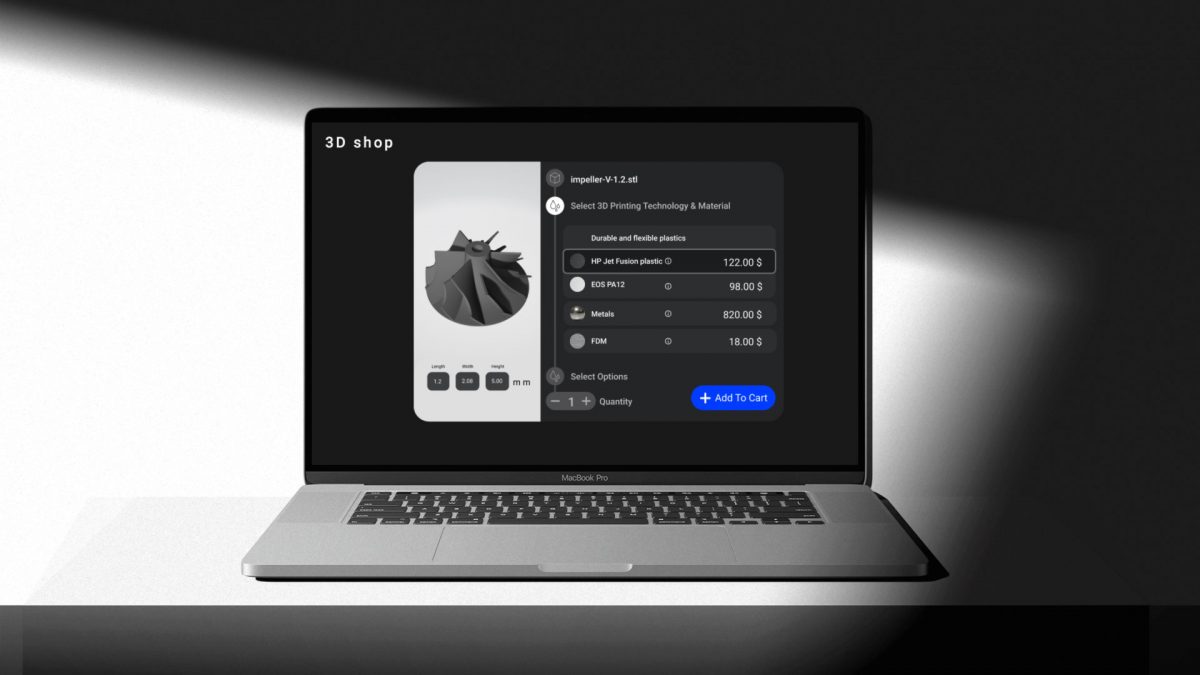
Layers lets users automate the quoting process for fast prototyping. Layers quoter can be installed directly on your website. Clients can get instant quotes from the Additive Manufacturing quoter. Even analyzes model files to determine if they can be manufactured, letting the customer choose from an array of custom parameters.


Clients can create a personal profile on Layers.app which they can use via the Customer Portal to directly collaborate with you and your team on the platform. With the Portal, clients can access their projects, files, invoices, and send messages from their desktop, tablet, or phone. By putting all materials related to a project in one place, it makes it simple for clients to stay in touch with you, reducing bad communications and saving time and resources.

Your customer portal can be easily installed on your website. Your brand can even be reflected in the portal.

Customers can remain in touch with you. Everything from the project is recorded and saved. Your team will save a lot of time and effort by having all files and communications in one location instead of having to create their own solution.


Categories
Newsroom

Optimizing 3d printing quote method

If you’re running a 3D printing service or a product development company where you’re quoting customers on digital fabrication services, you’re most probably pricing wrong.

Complications with Additive Manufacturing quoting

Predominantly 3D printing/Additive Manufacturing business owners undersell their services. The whys and wherefores are either a combination or one of the following:

● They don’t normally consider all of the supplementary components that go into running a business.

● They usually charge merely based on the volume of the CAD model not giving thought to numerical price fluctuations.

● Taking their slicer output of time to print and material usage too strict without substantially evaluating those variables and considering #1 above.

You could use a client-centered approach to correctly price 3D printed parts and projects that can possibly account for all aspects of the business (human/machine time, machine devaluation, software, facility cost) , the size of the job, and the unique characteristic of the parts. 

Also, there is a good chance you don’t take into account: the manual time it takes to prep, slice, validate, evaluate how to plate up and pull off parts; the total costs for software execution of those tasks; how long it actually takes to print parts accounting for machine depreciation.

We decided to start a company to help 3D printing and fabrication companies better manage projects, including how to price. We began building the solution.  

That solution is Layers.app

Layers.app is a software platform for 3D printing and digital fabrication companies to better collaborate with their clients throughout the entire lifecycle of the project, from start to finish. 

Our software features a suite of integrated tools that ensure project workflows are completed both optimally and efficiently. The tools include a “Public Auto quoter”, an online 3D viewer, a file sharing and messaging portal, and a payment portal. All of those tools are connected and work with each other so that the process is streamlined and made incredibly easy for both the business and the client. 

Our Auto quoter doesn’t just quote, the quote flows into the project workflow so that all relevant parties are set up for success. We like to tell our clients, “You’re not in the business of quoting, you’re in the business of executing projects for your customers.” That’s what our software enables you to do, and that attitude embodies the whole ethos of Layers.app. 

Finally, back to our holistic methodology on how to price 3D printing projects that accounts for all aspects of the business. What you need to do is find a base understanding of your true underlying business costs and determine the price given what margin is most optimal for your business. 

You can also play around with our 3d printing pricing calculator that we developed to complement our new methodology. 

Or you can simply reach out and contact us for a free consultation. We can talk about pricing, we can talk about Layers.app, or both. We’ve installed Layers.app with many different 3D fabrication shops all around the world and have a tremendous amount of insight on the industry that we’re more than happy to talk about.

If you’re looking to ensure you’re pricing correctly, or how to better your 3D printing business, contact us to learn more. We’re looking forward to speaking with you.

Categories
Updates

June 2021 Product Updates

Layers is on a mission to become the #1 CRM platform for 3d printing businesses. This month, we’ve made important updates to get closer. Now let’s review!


Comments

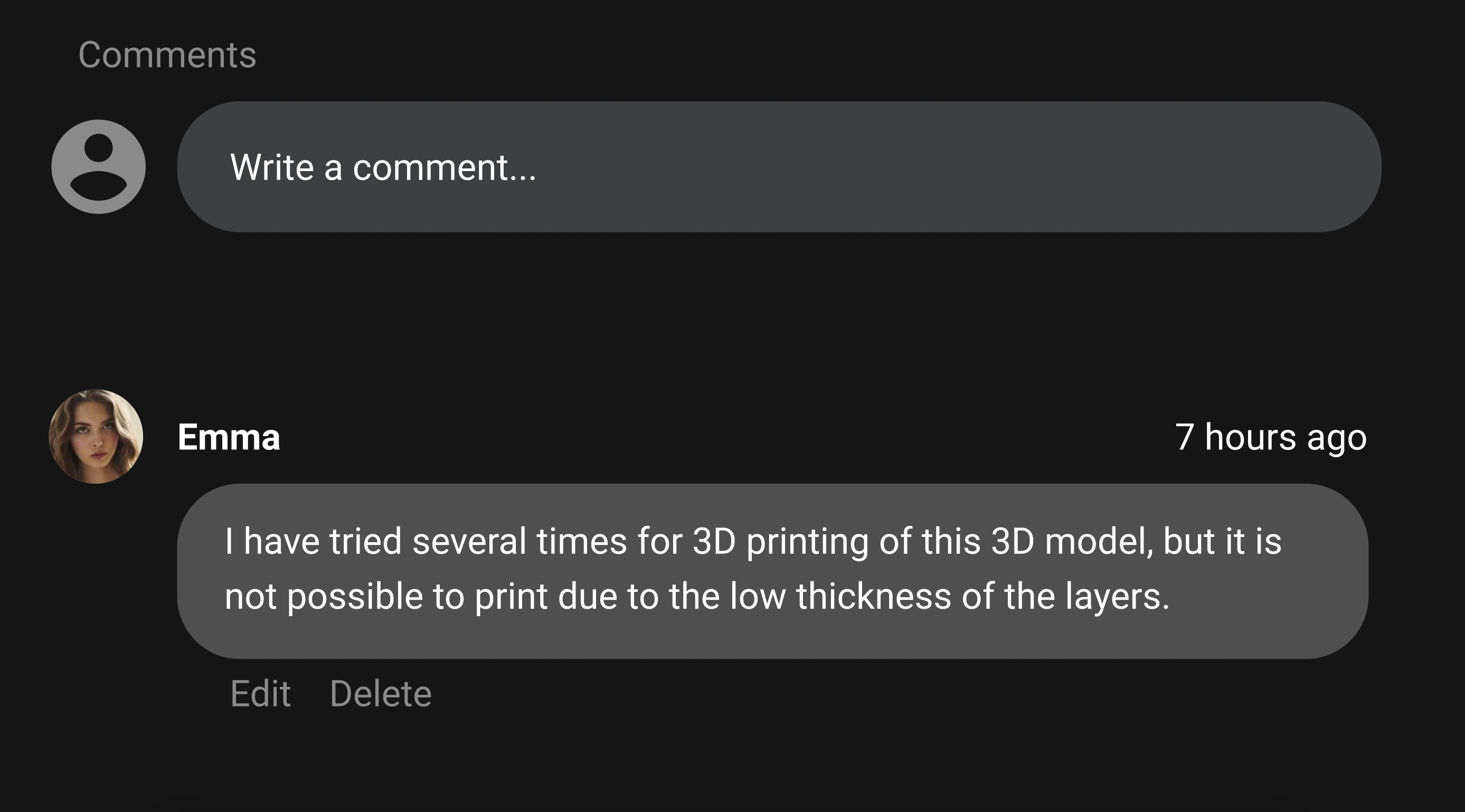
Having conversations with customers about their files and orders is one of the most important tasks of 3D printing workshops. Conversations like these usually take place via phone calls, instant messengers, or via email, so it is difficult to attach them to the order. Attaching these conversations to orders and 3D files allows staff to be informed of orders more quickly and efficiently.

In 3D printing orders, each 3d model usually has to be examined separately. In many cases, there is also a need to communicate directly with the customer about a specific 3D file. For example, suppose that all the parts of an order are prepared except for a specific item and you want to talk to that customer about that particular file.


layers app comment on card


Comments allow you to engage in a conversation on the back of a 3d order. To view the back of a card (a 3D model), click on the card to open it. 

When you or your customers comment on a card you see a yellow circle on that order and are notified about that comment. This feature helps you to fund new comments and conversations.


Comments are available now in Business and Enterprise plans.

Categories
Newsroom

A journey towards smart manufacturing

The story began at a desk in a startup accelerator. Our 3D printing service started producing parts and delivering them to our customers.


After five years, the same thing happened again. We found an investor for our service and are growing. We produced thousands of parts with different technologies in different countries and sent them internationally. SLA, SLM, SLS, MJF, FDM were among the technologies we had.

It was discovered what users of the 3d print service need, what information they are looking for, and how they feel when ordering the parts.


It was our daily goal to determine the needs of 3D printing service users and provide them with creative solutions. There are a variety of problems, ranging from pricing to product delivery issues. We now had a team of experienced professionals who understood every need of our clients, as well as had creative solutions.

We are here today because of this fascinating and full of experience journey.

A strong programming team with a Machine Learning background and 3D printing experience, in collaboration with 3D printing service providers worldwide.


Layers are the result of years of experience in 3D printing around the world. Smart 3D Printing ERP, CRM, and MES Empowering 3D printing services and will inbound this market. 


Layers: Simply explained

Consider an individual starting a hobby or career in 3D Printing. First, they might start their journey by 3D printing stuff and working on them to get a better understanding of how this technology works. The next step might be starting to make money from providing 3D Printing services to others.

Although there are various tools to handle 3D Printing business, from small to larger scales, but usually it takes a noticeable time to get everything running smoothly, especially in terms of softwares, financial control/tracking and customer support.

Layers cut this gap by providing an AI-based software to control everything in your 3D Printing business with ease and in an efficient and quick way.


Inclusivity in Layers

What we encountered in 3D Printing world is that, this industry sometimes does not attract individuals and communities from diverse societies.

We built Layers to gather more people from different cultures, genders and minorities to express their creativity with more ease. We believe the more a technology evolves, the more people come to embrace it.

And now, Layers is here to evolve Additive Manufacturing (a.k.a 3D Printing) and Artificial intelligence at the same time; to provide an equal opportunity for everyone to make things, to make our planet safer and cleaner by empowering a cleaner and greener manufacturing technology

Categories
Updates

May 2021 Product Updates

Welcome to Layers.app Product Spotlight.

The following are some of the features and tools now available to you in May 2021. Please drumroll 🥁🥁


Bulk mode

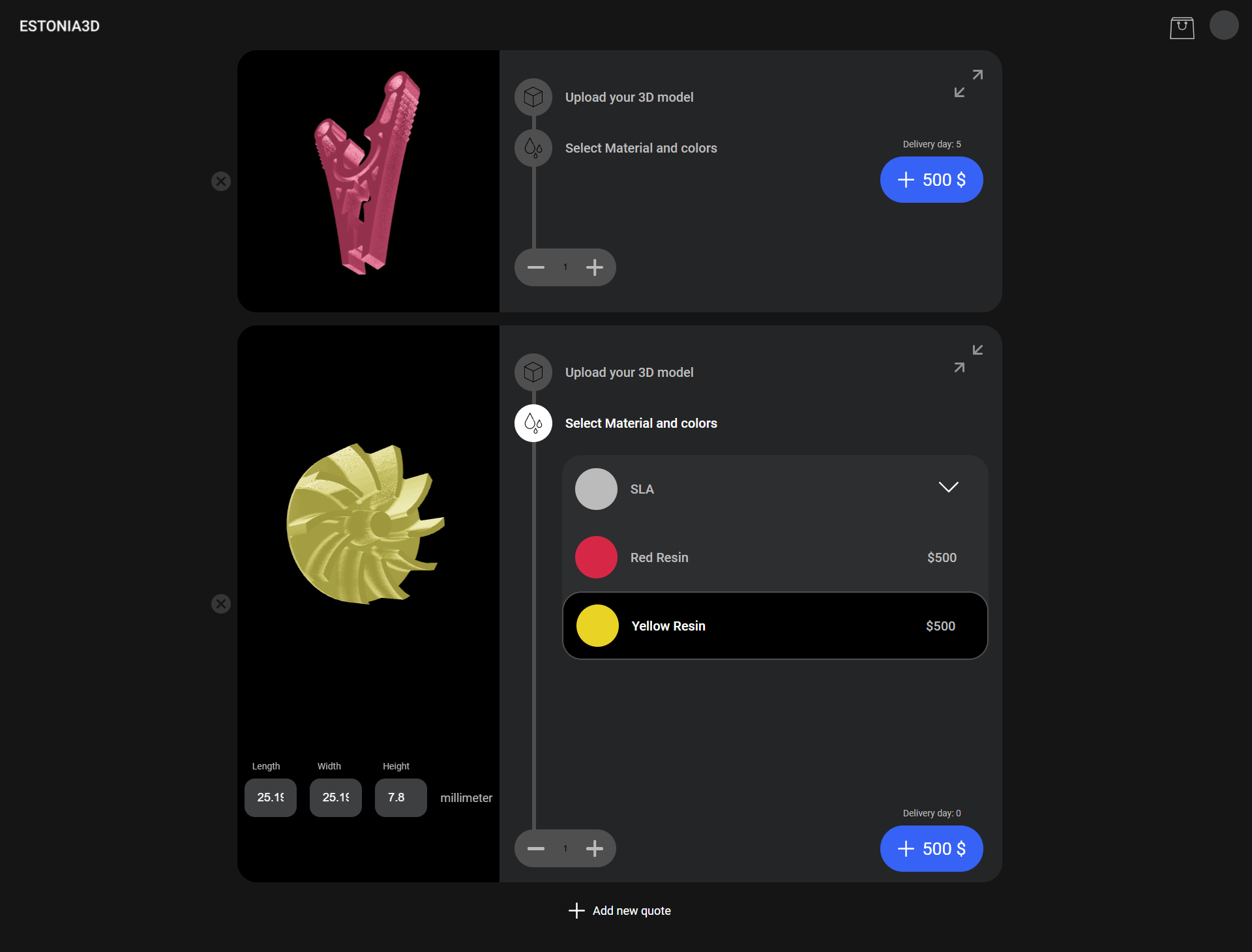
A 3D printing order usually includes several parts. To order a 3D printed prototype of a bicycle, you must inspect the wheels, the body, and the other individual parts separately and bulk upload is very useful in this kind of order.


Bulk Mode - Layers.app


you can drag and drop all of your 3d models into the upload page and Layers automatically open several quotation boxes for each 3d model.
this feature helps users who need to compare 3d models’ price quotations.

In the Enterprise and Business plans, this feature is available.


Custom User Journey 

For many 3D printing companies, it is a common objective to contact users who upload 3D files but do not place an order.


online-3d printing-service-user-journey-layers-app


To accomplish this, you must force the user to register before uploading. Registration before uploading a file may help you convert unconverted users to paying users, but it also repels many visitors who prefer not to share their email addresses.

We can say that this is a trade-off: Do you want to generate more leads or do you want to focus on ordering online?


From this month in the Business and Enterprise plan, you can change the user path: upload without registration, pre-upload registration and post-upload registration 3D file.


To change your shop user journey :

Back-office panel / Settings / Store Settings / User Login Journey 

Categories
Guides

Top 5 3D printing quoting software 2024

3D printing quotation is one of the main needs of 3d printing services customers. 3D printing workshops that have instant quoting software can win the game.

By allowing your users to receive the price of 3D printing at any time, you can scale your business.

There are many factors to consider when choosing an online 3D printing quotation software.
In this article, we want to examine the important factors in choosing a suitable pricing system for the 3D printing workshop and also review the well-known software available in the market.

Important features that every 3D printing quotation software should have:

The most important aspect of 3D printing software is the preciseness of quotation and how instant this process is. There are however other features that a 3D printing software is able to provide alongside its price calculation capabilities. 

In the competitive market, providing the customers with a quick price quotation is more than important. This software should be able to calculate the price based on the model, material, and the time consumed for its printing process. It also must be precise as it can not be modified after the printing process is over; as a result, customers need to get an accurate price calculation before they decide to place an order; so all the details should be taken into account.

First of all, the possibility and ease to interact with the 3D printing process; this software must be able to analyze 3D models that could be used in instructions used for 3D printing.

Another important factor is model printability, there are modeling platforms to enable you to check if the model is printable and repair it if needed before printing. 

Last but not least, the software should be user-friendly as we want to focus on physically producing the object through 3D printing.

Now let’s take a look into some of the most known software in this area:

There are two main types of 3d printing price quotations systems which are distinct in fundamental ways:

Manual 3D Printing Quote Softwares

This is the type of normal everyday 3d printing softwares which most workshops already are using in their workflow.
These quoting softwares are the most versatile and reliable option, they are usually part of a 3d printing slicer software that also generates g-code for 3d printers and offers basic 3d model editing tools. Although these softwares are reliable and accurate, they come at a great cost.
Pricing manually on an offline 3d printing slicer software needs to be done in-house for each order, this will take up massive resources and costs which make scaling up a very hard and risky process for manufacturing workshops.

Cura 

Cura is an open-source “slicing application” for 3D printers. Cura calculated the price of the products based on the time consumed, weight, and material used in the process of 3D printing. Cura is used by a large number of people around the world and it can be used for different types of printers. Cura also has a slicing engine that prints the aimed profiles very easily, besides the quotation service it provides.

It also provides you with recommended profiles that had already been tested.

It gives you access to a mode called “custom mode” in which you have access to more than 400 settings for granular control. There is a free and premium version in which they provide you with different features.

Simplify 3D

Another software in 3D printing is Simplify 3D, price quotation is one of its major use.It also instantly calculates the price of a product which is aimed to be printed instantly and precisely, taking its various properties. This software which is supported in English, Japanese, Spanish, German, French, Italian, and Portuguese is a software that translates models into printable instructions.

Slic3r

Slicer is also another software used by many 3D printing businesses. It is basically more of a slicing tool but it also offers price calculation service, taking the material, time consumed and the weight and size of the product which is meant to be printed into account.; this software reads 3D models ( supported formats include: STL, OBJ, AMF, 3MF) and it converts them into printable instructions for 3D printers.

Materialise magics

Materialise magics is another software that makes the 3d printing operation a lot easier; providing instant price quotation like other recommended software is also available alongside other features like giving you access to make different changes from small edits to wall thickness to generating support structures for the entire build; things that would be time-consuming or almost impossible without an appropriate platform or software. Simplifying data and building operations with one easy-to-use solution is another thing this software does.

Online 3D Printing Quotation Platforms

In contrast to offline quotation softwares, online 3d printing quotation softwares can be implemented on web and cloud and can be easily accessed and used by customers themselves.
This will give workshops a great advantage both on resource management and on customer satisfaction.
Customers can instantly get their price quotations based on infinite different choices without the need to wait for a response from an operator.
Customers will usually be able to place their order on the same platform used for pricing which also gives a substantial boost to your conversion rate.  

By allowing your users to receive the price of 3D printing at any time, you can scale up your business easily. There are many factors to consider when choosing an online 3D printing quotation software.
In this part, we will examine the important factors in choosing a suitable online quotation solution for a 3D printing workshop and also review well-known softwares available in the market.

AMFG

AMFG provides instant quotations based on material preferred by customers, the time consumed and the general aspects of the intended product like weight, volume, and quality. Customers can view the 3D-designed product from different angles and place orders. This online platform is a workflow software for additive manufacturing, enabling you to achieve an automated process in your 3D printing business. The main focus of this software is large manufacturers like the Automotive industry.

Layers

Layers is an all-in-one web-based platform designed solely for 3d printing workshops around the world.
With Layers, you can manage online orders, attract online customers and build an online web-based workshop all in one platform and through your customized domain.
Layers have a powerful built automated 3d printing cost calculator which can provide instant 3d printing quotations based on various pricing methods and different material settings.
Unlike most other cloud-based 3d printing software, Layers has a free subscription plan which gives your customers basic capabilities of an instant quotation system and empowers your workshop with the complete order management system designed exclusively for 3d printing bureaus.  

MakerOS

This platform also offers tools that calculate the price of customers’ orders. Like other aforementioned software, this online and easily accessible platform provides your customers with a price quotation based on different aspects and qualities of the intended product. This platform also has many other different traits as well; it automates quoting systems, gives you access to a client portal, it has a 3D viewer and a payment gateway. You can easily manage your projects using this platform.

[UPDATE] Shapeways Holdings, Inc. (NYSE:SHPW) made an acquisition that has generated significant interest in the business world. In a strategic move that occurred after the first quarter of 2022, Shapeways Holdings, Inc. successfully acquired MakerOS, Inc., expanding its portfolio and capabilities. In fact, the services of MakerOS have been stopped now.


Printelize

This platform also easily calculates prices online as well. It is an online sales automation software designed for 3D printing enterprises with the possibility to use your own domain and project management features.

Digifabster

Digifabster can also generate quoting and pricing of different orders and intended products of different qualities and features. It provides online service to numerous manufacturers and online shops through quote generation, converting leads, and production process management.

Categories
Stories Uncategorized

What is Manufacturing Operational Intelligence?

Introduction

Manufacturing Operational Intelligence (MOI) represents a fundamental shift in how manufacturing operations are monitored, analyzed, and optimized. In the context of additive manufacturing and 3D printing, MOI has emerged as a critical capability that transforms raw operational data into actionable insights, enabling service providers to move from reactive problem-solving to proactive optimization and strategic decision-making.

For 3D print service providers operating in an increasingly competitive landscape, understanding and implementing MOI isn’t just about collecting data—it’s about building a systematic approach to extract value from every print job, machine operation, and customer interaction. This article explores the intersection of Manufacturing Operational Intelligence and additive manufacturing, providing a comprehensive framework for understanding how these concepts converge to create smarter, more efficient 3D printing operations.

What is Manufacturing Operational Intelligence?

Manufacturing Operational Intelligence is the discipline of collecting, analyzing, and acting upon real-time and historical data from manufacturing operations to improve efficiency, quality, and decision-making. Unlike traditional business intelligence, which typically focuses on historical analysis and reporting, MOI emphasizes real-time visibility and the ability to take immediate action based on operational insights.

At its core, MOI operates on three fundamental pillars:

Data Collection and Integration: MOI systems gather data from multiple sources across the manufacturing environment—machines, sensors, quality control systems, enterprise resource planning (ERP) systems, and even manual inputs from operators. The key is creating a unified view of operations by integrating disparate data sources into a coherent framework.

Real-Time Analysis and Visualization: Raw data becomes valuable only when transformed into meaningful insights. MOI platforms process incoming data streams in real-time, applying analytics to identify patterns, anomalies, and trends. These insights are presented through intuitive dashboards and visualizations that make complex operational data accessible to decision-makers at all levels.

Actionable Intelligence and Continuous Improvement: The ultimate goal of MOI is to drive action. This means not only identifying problems but also providing recommendations, triggering automated responses, and enabling continuous improvement cycles. MOI creates a feedback loop where operational data informs decisions, those decisions lead to actions, and the results of those actions generate new data for further analysis.

The Unique Landscape of 3D Printing Operations

Before diving into how MOI applies to additive manufacturing, it’s essential to understand what makes 3D printing operations distinct from traditional manufacturing environments.

Traditional manufacturing typically involves repetitive processes with well-established parameters and predictable outcomes. A CNC machine cutting the same part repeatedly generates consistent data patterns. In contrast, 3D printing operations are characterized by extreme variability. Each print job might involve different geometries, materials, support structures, orientations, and post-processing requirements. This variability creates both challenges and opportunities for operational intelligence.

3D printing service providers often manage multiple technologies simultaneously—FDM, SLA, SLS, MJF, metal printing—each with its own operational characteristics and data signatures. A single facility might run dozens of different materials, serve customers across various industries with different quality standards, and handle everything from rapid prototyping to production-scale manufacturing.

The time scales in additive manufacturing also differ significantly. While a CNC operation might complete in minutes, a single 3D print can run for hours or even days. This extended production time means that early detection of problems becomes crucial—catching a failing print one hour into a twelve-hour job can save eleven hours of wasted time and material.

Furthermore, the additive manufacturing workflow extends beyond just the printing process. It includes pre-processing activities like file preparation, support generation, and build optimization, as well as post-processing steps such as support removal, surface finishing, and quality inspection. True operational intelligence must encompass this entire workflow, not just monitor the printers themselves.

Key Components of MOI in 3D Printing Environments

Implementing Manufacturing Operational Intelligence in a 3D printing operation involves several interconnected components, each addressing specific aspects of the manufacturing process.

Machine Monitoring and Performance Analytics

At the foundation of MOI for 3D printing is comprehensive machine monitoring. Modern 3D printers generate vast amounts of data during operation—temperature readings, motor positions, material flow rates, chamber conditions, and more. MOI systems capture this telemetry data continuously, creating a detailed record of every aspect of machine performance.

Performance analytics transform this raw machine data into meaningful metrics. Overall Equipment Effectiveness (OEE) becomes a crucial KPI, breaking down into availability (uptime vs. downtime), performance (actual vs. theoretical speed), and quality (good parts vs. total parts produced). For a 3D printing service provider managing a fleet of machines, understanding OEE across different printer types, materials, and application areas reveals where optimization efforts will have the greatest impact.

Predictive maintenance represents one of the most valuable applications of machine monitoring. By analyzing patterns in machine behavior—vibration signatures, temperature fluctuations, gradual performance degradation—MOI systems can predict when components are likely to fail. This enables scheduled maintenance during planned downtime rather than unexpected failures during critical print jobs.

Job-Level Intelligence and Traceability

While machine-level monitoring focuses on equipment, job-level intelligence tracks individual print jobs from quote to delivery. This granular tracking creates complete traceability, answering questions like: What were the exact print parameters? Which operator prepared the file? What was the actual material consumption versus the estimate? How long did post-processing take?

Job-level data enables powerful analysis of profitability and efficiency. By comparing estimated versus actual costs across hundreds or thousands of jobs, patterns emerge. Perhaps certain geometries consistently take longer than estimated. Maybe specific materials have higher failure rates with particular part types. This intelligence allows for more accurate quoting, better resource allocation, and targeted process improvements.

Print success prediction is an emerging application of job-level intelligence. By analyzing historical data on successful and failed prints, machine learning models can assess the likelihood of success for a new print job based on its geometry, orientation, support structure, material, and machine assignment. This allows proactive intervention—adjusting parameters, changing orientation, or selecting a different machine—before committing to a multi-hour print that’s likely to fail.

Quality Intelligence and Defect Detection

Quality assurance in 3D printing has traditionally been largely manual, relying on operator inspection and customer feedback. MOI brings a data-driven approach to quality management.

In-process monitoring uses sensors and cameras to detect problems during printing. Thermal cameras can identify hot spots that indicate warping or delamination. Optical systems can detect when support structures fail or when material extrusion becomes inconsistent. When integrated with MOI platforms, these monitoring systems don’t just record problems—they can trigger alerts, pause prints for operator intervention, or even adjust parameters automatically.

Post-process quality data creates another vital feedback loop. Dimensional accuracy measurements, surface finish assessments, and mechanical property tests generate data that can be correlated back to print parameters. Over time, this builds a knowledge base: specific geometries printed in certain orientations consistently meet tighter tolerances, or particular layer heights yield better surface finishes for specific applications.

First-time-right rates become a critical quality metric. MOI systems track what percentage of jobs complete successfully without requiring reprints. By analyzing the factors contributing to first-time failures—file preparation errors, material issues, machine problems, parameter selection—targeted improvements can dramatically increase success rates and reduce waste.

Material Management and Optimization

Material represents a significant cost in 3D printing operations, and MOI provides unprecedented visibility into material usage and efficiency.

Real-time material tracking goes beyond simple inventory management. MOI systems monitor actual material consumption per job, comparing it against theoretical requirements. Significant deviations might indicate problems—material waste due to excessive support structures, calibration issues causing over-extrusion, or even material properties changing due to age or storage conditions.

Material traceability becomes especially important for industries with strict regulatory requirements. MOI systems can track every detail: which specific batch or lot of material was used for each part, when it was opened, what environmental conditions it was stored under, and its complete usage history. If a material batch proves defective, every part printed with that batch can be immediately identified.

Support optimization represents a major opportunity for material savings in many 3D printing technologies. MOI systems can analyze support generation strategies across thousands of prints, identifying which approaches minimize material use while maintaining print reliability. This collective intelligence, drawn from operational data, becomes far more valuable than individual operator intuition.

Workflow and Resource Optimization

Beyond individual machines and jobs, MOI provides intelligence about the overall workflow and resource utilization across the entire operation.

Build scheduling becomes dramatically more sophisticated with operational intelligence. Rather than simply queuing jobs in order, intelligent scheduling considers machine capabilities, current loads, material availability, operator skills, and deadline priorities. MOI systems can simulate different scheduling scenarios, predicting completion times and identifying bottlenecks before they occur.

Labor analytics reveal patterns in how human resources are utilized. Which operators are most efficient at file preparation? What times of day see the highest post-processing throughput? Where do jobs wait the longest for human intervention? These insights enable better staffing decisions and targeted training investments.

Capacity planning moves from guesswork to data-driven forecasting. By analyzing historical demand patterns, current pipeline, and machine capabilities, MOI systems can predict when capacity constraints will be reached. This provides the lead time needed to make strategic decisions—investing in additional equipment, outsourcing certain jobs, or adjusting pricing to manage demand.

The Role of AI and Advanced Analytics

The integration of artificial intelligence and machine learning with Manufacturing Operational Intelligence represents the next evolution in additive manufacturing optimization.

Generative design AI, such as the text-to-CAD systems you mentioned like adam.new, creates interesting opportunities when integrated with operational intelligence. Imagine a system where design intent expressed in natural language gets translated not just into CAD geometry, but into geometry that’s automatically optimized for your specific manufacturing capabilities. The AI considers your actual machine performance data, material success rates, and cost structure to generate designs that are not just manufacturable but optimally manufacturable in your facility.

Process parameter optimization through machine learning can discover relationships too complex for human analysis. Neural networks trained on thousands of successful prints can recommend optimal parameter sets for new geometries, considering factors like material, machine, desired surface finish, and strength requirements. As these systems learn from each new print, they continuously improve their recommendations.

Anomaly detection algorithms excel at identifying unusual patterns that might indicate problems. In 3D printing, where every job is different, traditional rule-based alerting struggles to distinguish normal variation from genuine problems. Machine learning models learn what “normal” looks like for different types of jobs and can flag genuine anomalies while reducing false alarms.

Computer vision integrated with MOI platforms transforms how quality is assessed. AI-powered image analysis can inspect printed parts for defects far more consistently than human inspectors, and at much higher speeds. These systems learn to recognize acceptable variations while flagging genuine quality issues, creating inspection data that feeds back into the operational intelligence platform.

Implementing MOI in Your 3D Printing Operation

For 3D print service providers looking to implement Manufacturing Operational Intelligence, a phased approach typically yields the best results.

The foundation phase focuses on data infrastructure. This means ensuring that data from all relevant sources—printers, slicing software, ERP systems, quality measurement tools—can be collected and stored in accessible formats. Many operations underestimate this challenge. Legacy equipment might not have APIs for data extraction. Different systems use incompatible data formats. Building this foundation requires both technical investment and organizational commitment.

The visibility phase brings that data together into meaningful dashboards and reports. Start with the metrics that matter most to your operation. For most 3D printing services, this includes machine utilization, job completion rates, material consumption, on-time delivery, and first-time-right rates. The goal is creating shared visibility across the organization—from machine operators to business leaders—using a common set of operational metrics.

The intelligence phase moves beyond visibility to analysis. This is where patterns emerge from the data. You discover that certain file preparation approaches correlate with higher success rates. You identify that specific machines have subtle performance characteristics that make them better suited for particular applications. You recognize that jobs from certain industries have predictable post-processing requirements that should inform scheduling.

The optimization phase closes the loop by acting on intelligence. This might mean automated alerts when anomalies are detected, recommended actions based on predictive models, or even fully automated parameter adjustments. The key is creating systematic processes where operational intelligence drives continuous improvement.

Platforms and Technologies Enabling MOI

The technology landscape for Manufacturing Operational Intelligence in 3D printing includes several categories of solutions.

Manufacturing execution systems (MES) tailored for additive manufacturing provide comprehensive workflow management. Platforms like 3YOURMIND, AMFG, Layers.app and others specifically designed for 3D printing operations include built-in operational intelligence capabilities. These systems manage the entire job lifecycle while collecting the data needed for analysis and optimization.

IoT platforms and industrial connectivity solutions handle the challenge of extracting data from diverse machines and sensors. Technologies like OPC UA provide standardized interfaces for industrial equipment, while edge computing devices can collect and pre-process data from machines that lack native connectivity.

Data analytics and visualization platforms such as Tableau, Power BI, or specialized manufacturing analytics tools transform raw operational data into intuitive dashboards and reports. The trend is toward no-code or low-code platforms that allow operators and managers to build their own analyses without requiring data science expertise.

AI and machine learning platforms are increasingly accessible through cloud services. Amazon Web Services, Microsoft Azure, and Google Cloud all offer machine learning tools that can be applied to manufacturing data. Specialized companies are also developing AI solutions specifically for additive manufacturing challenges.

The platforms you mentioned, like layers.app, represent an interesting evolution. These digital manufacturing platforms combine operational management with customer-facing capabilities like instant quoting and order management. When these platforms integrate AI-powered design tools, they create a seamless flow from customer intent through design optimization to manufacturing execution—all informed by operational intelligence.

Real-World Impact and Benefits

The business case for Manufacturing Operational Intelligence in 3D printing operations is compelling when examining real-world implementations.

Operational efficiency gains typically show up first. Service providers implementing comprehensive MOI report 15-30% improvements in machine utilization by reducing unplanned downtime, optimizing job scheduling, and minimizing time between jobs. For a facility with significant equipment investment, these utilization gains directly impact return on capital.

Quality improvements and reduced waste represent another major benefit category. By catching problems early, optimizing parameters based on historical data, and implementing systematic process controls, facilities report 20-40% reductions in failed prints and material waste. In industries like metal 3D printing, where material costs are substantial, these savings can be dramatic.

Faster time-to-delivery becomes possible through better resource allocation and workflow optimization. When you can predict exactly when jobs will complete, optimize scheduling to minimize bottlenecks, and reduce the incidence of failed prints requiring reruns, overall lead times decrease significantly. This competitive advantage enables better customer service and can command premium pricing.

Labor productivity improvements come from multiple sources. Operators spend less time hunting for information when dashboards provide instant visibility. Automated alerts reduce the need for constant manual monitoring. Data-driven training focuses improvement efforts where they’ll have the most impact. The result is that your team accomplishes more with the same headcount.

Strategic decision-making improves when leadership has reliable operational data. Questions like “Should we invest in additional capacity?” or “Which market segments are most profitable?” or “How should we price complex geometries?” can be answered with data rather than intuition. This reduces risk and enables more confident strategic planning.

Challenges and Considerations

Implementing Manufacturing Operational Intelligence isn’t without challenges, and service providers should approach it with realistic expectations.

Data quality issues often emerge as the primary obstacle. Garbage in, garbage out applies fully to operational intelligence. If machine data is unreliable, if operators don’t consistently log information, if systems aren’t properly integrated, the resulting intelligence will be flawed. Building a culture of data quality requires training, process discipline, and often technical improvements to data collection systems.

Integration complexity can be substantial, especially for operations with diverse equipment from multiple vendors. Each printer model might require custom integration work. Legacy systems might lack APIs or require middleware for data extraction. The technical effort and cost of achieving comprehensive integration should not be underestimated.

Change management represents perhaps the biggest non-technical challenge. Operators who’ve run prints successfully for years might resist having their decisions questioned by data systems. Managers comfortable with intuitive decision-making might struggle to adopt data-driven approaches. Successful MOI implementation requires addressing these cultural challenges through communication, training, and demonstrating value.

Information overload can paradoxically result from too much data without sufficient focus. The temptation is to track everything possible, creating dashboards that overwhelm rather than inform. Effective MOI requires discipline in identifying the vital few metrics that truly drive performance, rather than tracking the trivial many.

Privacy and security considerations grow as more operational data gets collected and analyzed. Especially when using cloud-based platforms or AI services, ensuring that proprietary manufacturing knowledge and customer data remain secure becomes critical. This requires robust data governance and security practices.

The Future of MOI in Additive Manufacturing

Looking ahead, several trends will shape the evolution of Manufacturing Operational Intelligence for 3D printing.

Edge AI and real-time intelligence will move more processing directly to machines and local edge devices. Rather than sending all data to cloud platforms for analysis, intelligent edge systems will make real-time decisions about parameter adjustments, quality assessment, and problem detection with minimal latency.

Digital twins—virtual replicas of physical manufacturing systems—will become increasingly sophisticated. These digital models, continuously updated with real operational data, will enable powerful simulation and optimization capabilities. Before making changes to physical processes, manufacturers will test them thoroughly in the digital twin environment.

Autonomous manufacturing systems represent the long-term vision, where AI-powered systems handle increasingly complex decisions with minimal human intervention. Prints that deviate from expected behavior get automatically corrected. Jobs get scheduled and routed to machines without manual assignment. Material orders get placed automatically based on predicted consumption.

Cross-facility intelligence becomes possible as MOI platforms aggregate data across multiple locations. For service providers operating multiple facilities, or for industry consortiums, this collective intelligence can accelerate learning and improvement across the entire network. Best practices discovered in one facility can be automatically propagated to others.

Enhanced human-AI collaboration will characterize the near-term future. Rather than replacing human expertise, MOI systems will augment it. Operators will receive AI-powered recommendations but retain decision authority. Managers will use AI to explore scenarios but apply their judgment to final decisions. The goal is enhancing human capability rather than eliminating human involvement.

Conclusion

Manufacturing Operational Intelligence represents a fundamental capability for competitive 3D print service providers. In an industry characterized by customization, variability, and rapid technological evolution, the ability to systematically learn from operational data and translate that learning into continuous improvement is not just advantageous—it’s essential.

The journey toward comprehensive MOI is neither quick nor simple. It requires investment in technology infrastructure, commitment to data quality, organizational change management, and sustained focus on translating data into action. However, the organizations that successfully implement MOI gain significant competitive advantages: higher efficiency, better quality, faster delivery, lower costs, and more strategic decision-making.

For service providers familiar with additive manufacturing technologies, the next frontier of competitive advantage lies not just in having the latest printers or materials, but in having the intelligence systems that extract maximum value from every aspect of your operation. As AI-powered design tools, digital manufacturing platforms, and advanced analytics capabilities continue to evolve, the integration of these technologies with operational intelligence will define the leaders in additive manufacturing.

The question is not whether to implement Manufacturing Operational Intelligence, but how quickly and effectively you can build these capabilities into your operation. The data is already being generated every time your printers run. The opportunity is transforming that data into the intelligence that drives your competitive advantage.